
The Place With No Value
A MATH ADVENTURE NOVEL · AGES 10–14
In our world, he can’t pass math.
In theirs, he’s the one they count on.
Perfect for readers who think they hate math, with Easter eggs and secrets for the grown-ups, too.
Written by a middle school math teacherRead the first chapter free →
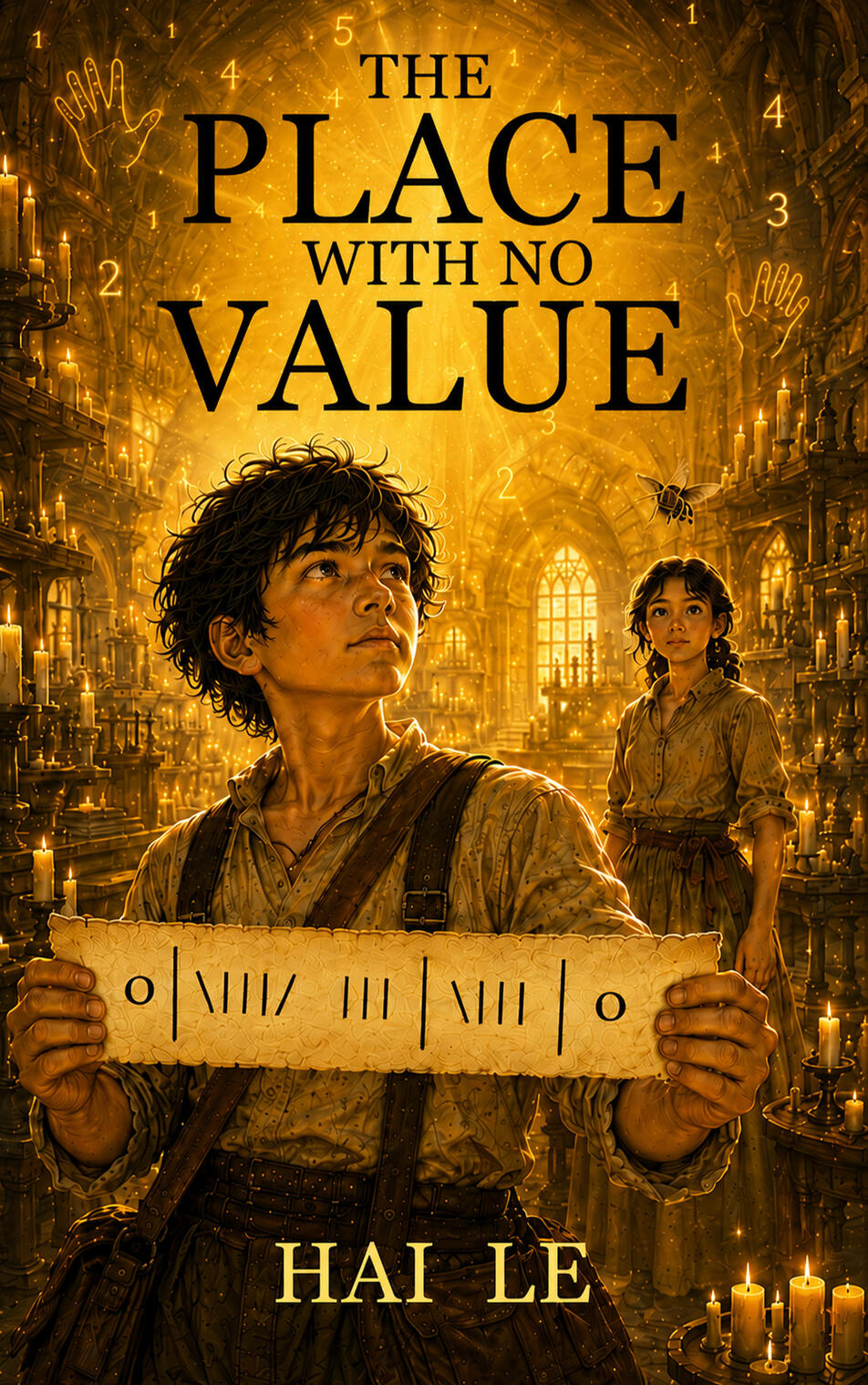
The Place With No Value
Raymond Shayo has never been good at math. But after an ordinary school day ends in the most extraordinary way imaginable, he finds himself in a candlelit world where numbers are written in a way unlike anything he has ever seen.At first, the strange customs, unfamiliar people, and endless rows of glowing candles are enough to keep him busy. Then he notices something no one else does.The more Raymond tries to understand this world, the more one question refuses to leave him alone:How can an entire civilization be missing something so important without anyone realizing it?ADVENTURE · A candlelit world, a mystery at its center, and a kid who sees what everyone else missed.MATH · Place value, zero, and logical reasoning woven into the story, with no worksheets in sight.HEART · One wrong answer doesn’t define your worth.Ages: 10–14 · Length: 442 pages · Published: July 18, 2026 · ISBN: 979-8-9970260-1-1

About the Author
Hai Le is a middle school math teacher who believes that struggling with math does not define a student’s intelligence or worth. The Place With No Value is his first novel.On the first day of class, Hai tells his students that learning math can feel like walking through a dark room. You bump into things and you don’t know where you’re going. Then one day something clicks, and the light turns on. So he wrote a story about a kid who thinks he’s bad at math, and set it in a world where making light is at the center of everything.When he isn’t teaching or writing, he spends time with his family and looks for new ways to help students see math differently.
For Educators and Librarians
The Place With No Value is a natural fit for grades 6–8 classrooms. The story invites discussion about how numbers work, why zero matters, how to reason through a problem, and how students talk to themselves about mistakes.Already in public library collections. Educators and librarians are welcome to contact [email protected] regarding review copies, library donations, classroom use, or other inquiries. Requests will be considered based on availability.Coming soon: a companion discussion guide with chapter-by-chapter questions, hands-on activities using the book’s own counting system, and go-deeper math extensions.
© 2026 Rebmun Press. All rights reserved.